

Prayer and Revival
By Scott L. Harris
Pastor of Grace Bible Church in Wappingers Falls, NY. BS in Agricultural Biology from California State Polytechnic University, Pomona; MDiv The Master’s Seminary.
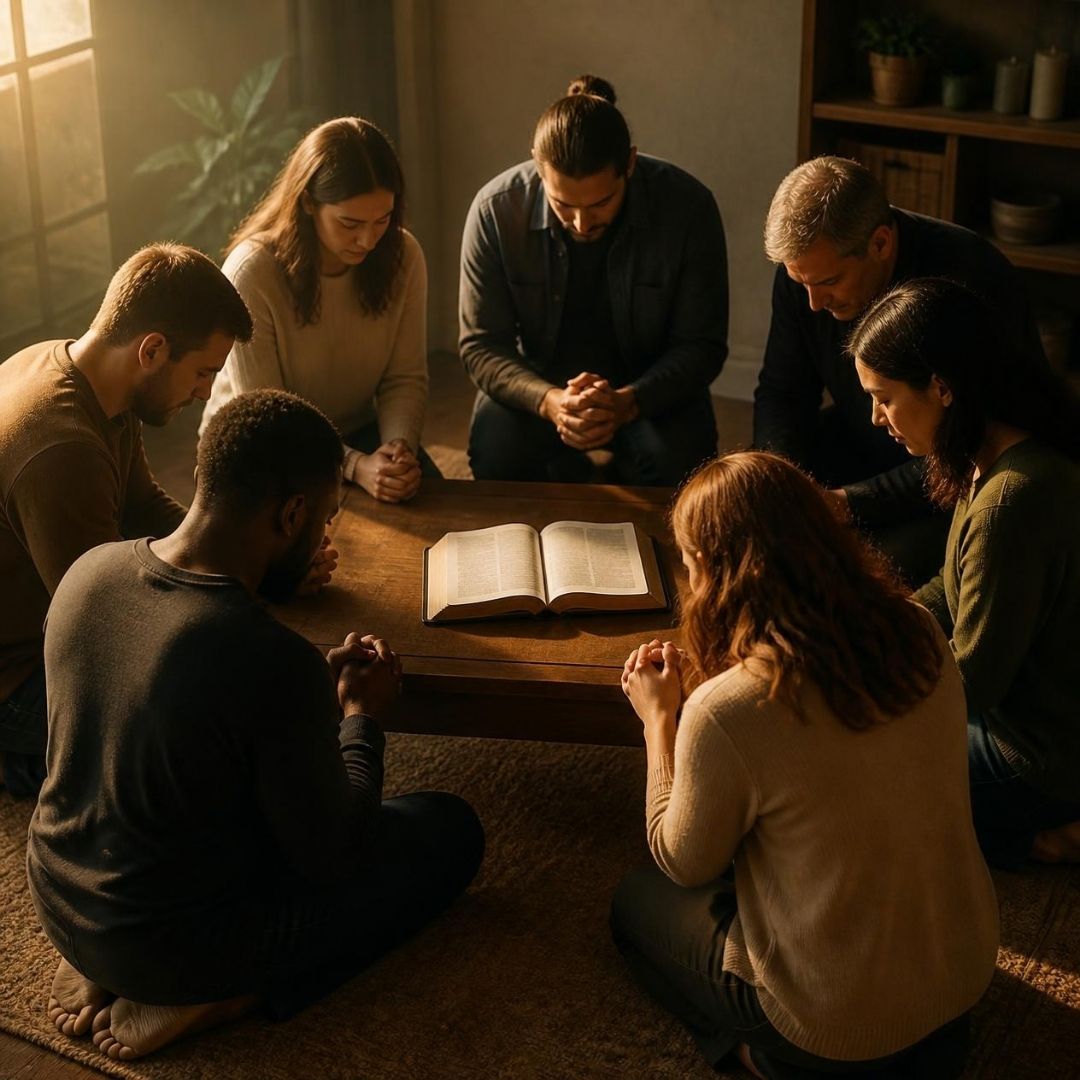
I was blessed to be raised in a Christian home in which church was a central part of our lives. We participated in the Sunday services, mid-week services and a lot of special events. The yearly calendar usually included a mission conference, a prophecy conference and a weeklong revival meeting. Praying for revival was a normal part of every church in which I have been a member. It has been a normal part of my own praying for the last half a century. But what does it mean to pray for revival?
Our English word “revive” has a root meaning of “to live again” and is used in both physical and metaphorical senses. The Hebrew word chayah, translated as “revive,” is used in the same way. It can refer to restoration of life (2Ki 13:21), return of physical strength (Jdg 15:19), a renewal of spirit from depression (Ge 45:27), and regaining of motivation (Ps 119:93). The last two uses are common pleas in the Psalms. In the New Testament, these same ideas are conveyed by several different Greek words including anazaō, to come to life again (Lk 15:24); anathallō, to restore to an active state (Php 4:10); anatauō, to refresh (1Co 16:18); anapsychō, to recover a state of cheer or encouragement (2Ti 1:16), syzōpoieō, to cause to live again with (Eph 2:5). Corresponding to the wide range of meanings of these words, there has also been a corresponding wide range of ideas about revival.
A common motivation for praying for revival has been related to the moral decline of society and the suffering that comes as a natural consequence to widespread sin and God’s chastening. The book of Judges is a good example of this type of quest for revival. The cycle would start as the people forsook the Lord to do what was right in their own eyes, then the Lord would bring about the curses about which He had forewarned them. As the oppression increased, the people would cry out to God in repentance, and the Lord would provide a deliverer who would bring peace back to the land. After that judge would die, the cycle would start again as the people forsook the Lord. Sometimes the nation would remain on course for a generation or two such as during the time of Joshua and the generation following him (Jdg 2:7). At other times, the moral collapse would occur quickly with a change in the national leadership. Joash (2Ch 24) is an example of this. He and the nation did well as long as Jehoiada the high priest was alive, but after Jehoiada died, Joash and the nation turned away from the Lord and back to idolatry.
I do not believe I am any different from any other believer whose soul is vexed by the spiritual and moral decline of our own nation into the depravity of mind, described at the end of Romans 1. This decline has occurred regardless of any movements to the contrary. I was grateful for the rise of the Moral Majority and the brief political reprieve in the 1980’s, but society continued to decline even then because it was turning its back on God. The moral collapse of society has continued at an increasing pace as secularism and false religions replace biblical Christianity in our land. Too many churches that were at one time in the evangelical camp have been blown off course by the many winds of theological heresy over the last century. They are blowing strong again as the gospel of Christ is traded in for Marxist ideas of justice and equality even within churches that are supposed to be conservative. I pray for God’s mercy on our nation much the same way Abraham prayed for Sodom, fully recognizing that unless there is revival, this nation is doomed. However, while love of country and desire to live in a moral society is emotionally motivating to pray for God to extend His mercy and grace to this nation, my quest must be much greater than that. I am to pray for a true revival which is much more radical than just a moral resurgence that would make life more pleasant.
Perhaps some distinctions need to be made at this point. Iain Murray does this well in his book, “Revival and Revivalism.” Regarding revival, Murray cites people such as Solomon Stoddard, who in 1712 described revival as “some special seasons wherein God doth in a remarkable manner revive religion among His people.” Jonathan Edwards would later describe the Great Awakening as a “surprising work of God.” Abel Stevens commented in 1867 in his history of American Methodism that its success was due to “power from on high,” an “unction from the Holy One.” In short, revivals came unexpectedly as God moved powerfully upon His people resulting in them living in greater holiness and service of His kingdom, and in the Holy Spirit convicting sinners to repent and believe in the Lord Jesus Christ. The book of Acts is a history of revival as the church begins suddenly and spreads rapidly.
Revivalism developed in the later part of the 1800’s and is described by John Kent as “a method of obtaining (at least in appearance) the external signs of conviction, repentance and rebirth.” Seasons of revival gave way to “revival meetings” run by a revivalist. These methods could generate a lot of religious excitement, and certainly there would be changes in the lives of some because of the preaching of God’s Word, but far too often the responses would best be called emotionalism, which died down instead of the genuine heart change that comes when the Holy Spirit convicts and fills. Charles Finney (1792-1875) was a promoter of revivalism which ended up leaving large areas as “burned over ground” in which people who had been initially emotionally affected would then turn against the gospel and became hardened to Christianity.
These distinctions must be made because if we are going to pray for revival, we should know for what we are actually praying. Praying for a restoration by God of the nation back to a moral character it once had is not enough. Seeing bored church pew sitters get excited to do something in the Lord’s service for a while is not enough. Having sinners make professions of faith that will be questionable within a year is not enough. Do not pray for revival for some short-term gain. Pray for revival for permanent transformation. Praying for revival is beseeching God to do His radical work of making the dead alive in Christ (Eph 2:4-10) and animating the spiritually dull to live as lights in the world for the glory of Christ (Eph 5:7-10).
Praying for revival requires a radically different purpose and manner of prayer than what is all too common among too many professing Christians who pray like James 4:3 instead of Matthew 6:9-10. We must pray as Jesus taught His disciples instead of for our own benefit. Our praise, prayers, and petitions are to be to our Father who is in heaven for the purpose that His name would be hallowed, with longing for His kingdom to come, and yearning to see His will done on earth as it is in heaven. Such prayer requires having your own desires transformed to match those of the Lord. It demands a humility that places the focus on God’s glory so that your own is irrelevant. That has some very practical ramifications, especially for those of us who are pastors as we plead with the Lord for revival. Here are a few.
- Pray for the Lord’s name to be magnified in all that you do without concern that anyone even knows your name. That God knows your name is enough, and the rewards that we should desire are those to be received when we reach heaven (1Co 3:12-15; 1Pe 5:4). We are to be humble and leave any exaltation in God’s hands as He determines what is best (1Pe 5:6). Revival is about God’s fame, not your name.
- Thank God for whatever gifts, ministry, and abilities that you have since all of them come from Him, and then also thank Him for what He has given to other people. All of these come from God as He decides for the common good and maturity of the whole body (Eph 4:11-16; 1Co 12:4-11). A mark of revival is churches functioning in the unity of the Spirit with the people working in harmony with one another. Such churches will mature and fulfill God’s purposes. Jealousy is contrary to revival because it is in opposition to ministry of the Holy Spirit and it will quickly destroy a church. Revival is the display of God at work though His people.
- Praise God whenever you hear of the growth of sound gospel preaching and Bible teaching in churches even when you are in one that is struggling or even shrinking. The Spirit moves as He desires (Jn 3:8) and Christ builds His church (Mt 16:18), so it is up to the Lord when and where He works. History demonstrates that it has been common for God to bring revival to one area while others remain static or in decline, such as the area where I live and minister. I long to hear of other local churches doing well and I am greatly encouraged by news of the outpouring of God’s Spirit even when it is in distant places. Revival is about God’s kingdom, not my own, so He is to be praised for whatever work He is doing wherever He is doing it.
- Pray for your people the same way Paul did for those he ministered to as recorded in Ephesians 1:15-19, Philippians 1:9-11, Colossians 1:9-12 and 2 Thessalonians 1:11-12. Too often our prayers are focused on the surface issues of the temporal troubles people face instead of the underlying issues that would bring peace to those troubles. Pray that God would grant that the people would know the fullness of Christ, what He has done, and what He has promised. Pray they would be filled with spiritual understanding and wisdom necessary to walk in a manner pleasing to the Lord and bear spiritual fruit in keeping with such a walk, and that He would strengthen them to do so. Pray they would live in such a way that Jesus would be glorified in them. A mark of revival is God’s people living in a manner worthy of their calling (Eph 4:1).
- Plead with the Lord for the salvation of souls as the Holy Spirit does His ministry of convicting the world of sin, righteousness, and judgment (Jn 16:8-11) and quickens the souls of those dead in transgressions and sin to believe (Eph 2:5). And as much as we desire for the Lord to return quickly, we regard the patience of our Lord in each day that He tarries, for it gives time for yet another sinner to repent (2Pe 3:15). Revival expands as sinners become saints.
Praying for revival is radical because true revival is radical. It encompasses Christians who have become discouraged or complacent to be renewed to spiritual vibrancy and those spiritually dead being awakened to life. While both of these are common in normal Christian experience, revival is an outpouring of God’s Spirit in a surprising manner for a special season. May we be careful to praise the Lord when we hear of such seasons of His grace being poured out in other areas, and may He be gracious to grant such a season in our own midst as well as for His own glory.
Copyright VOICE Magazine, used by permission.
Issue: January/February 2021.